
Why Quality Exterior Siding Matters for Your Lowell Home
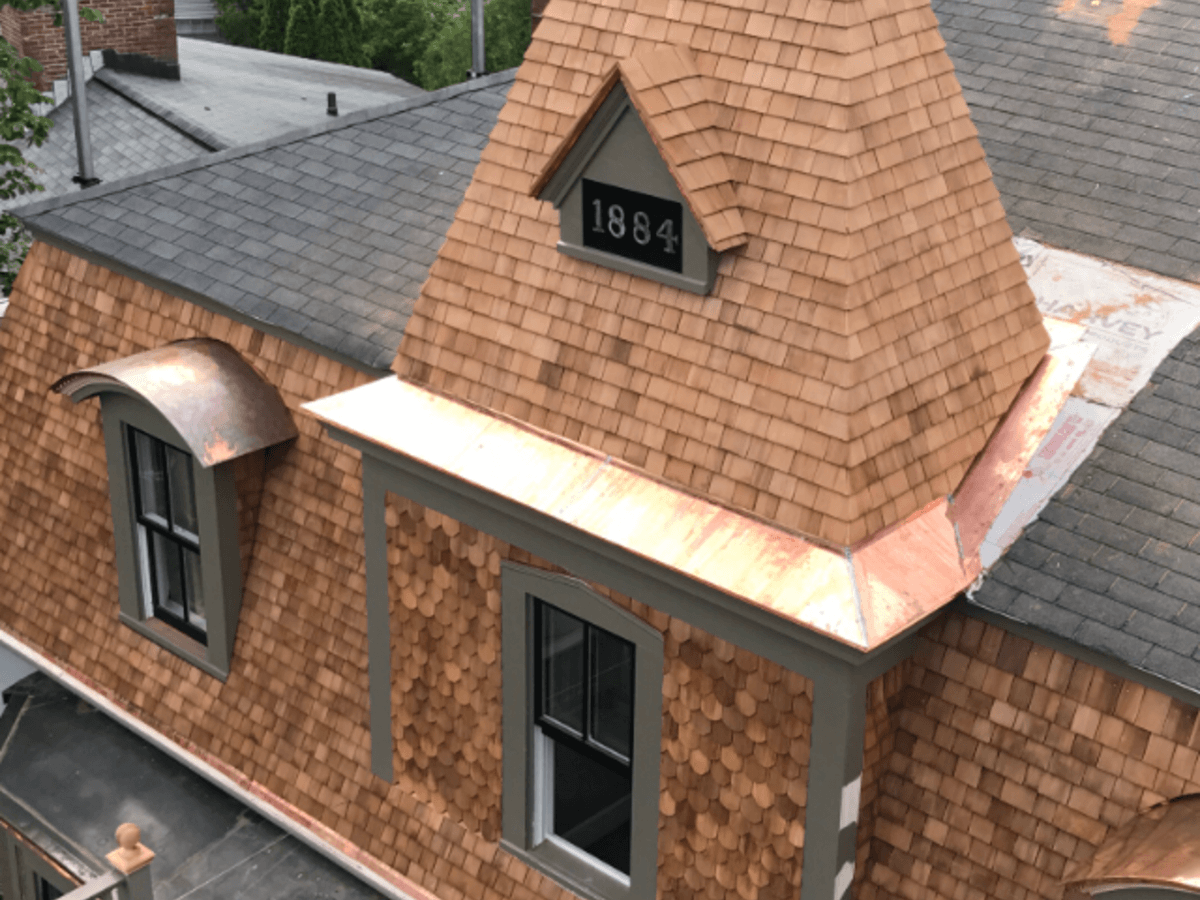
Your siding and roofing work together as a single exterior system. Quality Exterior siding Lowell installation helps protect wall assemblies from wind-driven rain, snow, and freeze–thaw cycles—while your roof, flashing, and gutters manage water shedding from the top down. When any part of that system fails, moisture can find its way behind the cladding, increasing the risk of rot and premature wear.
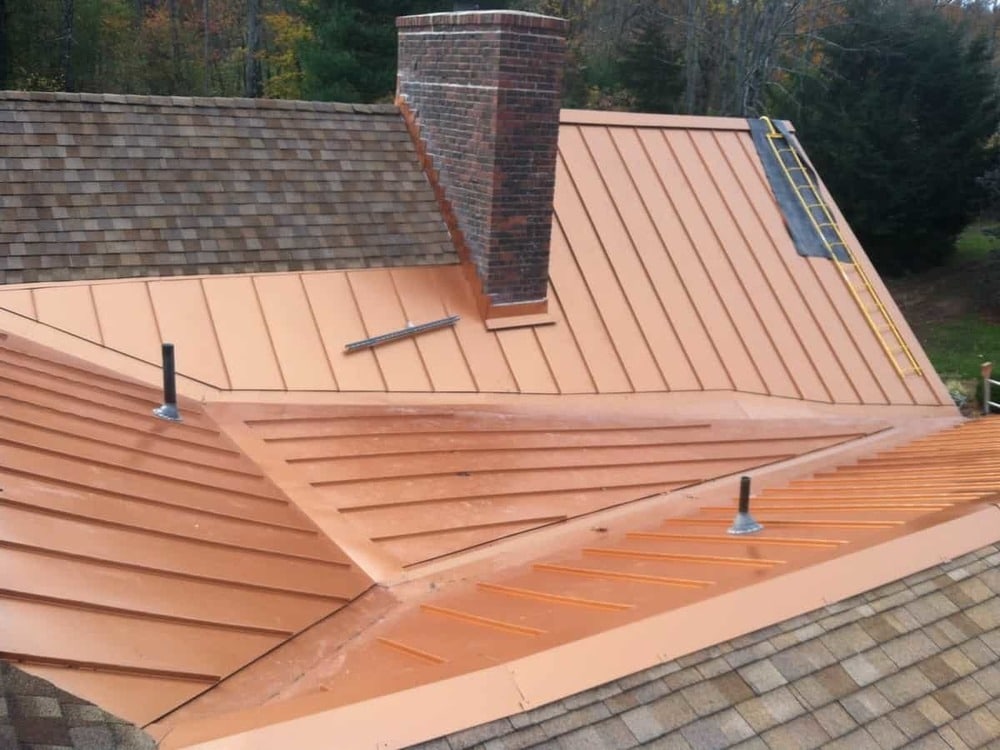
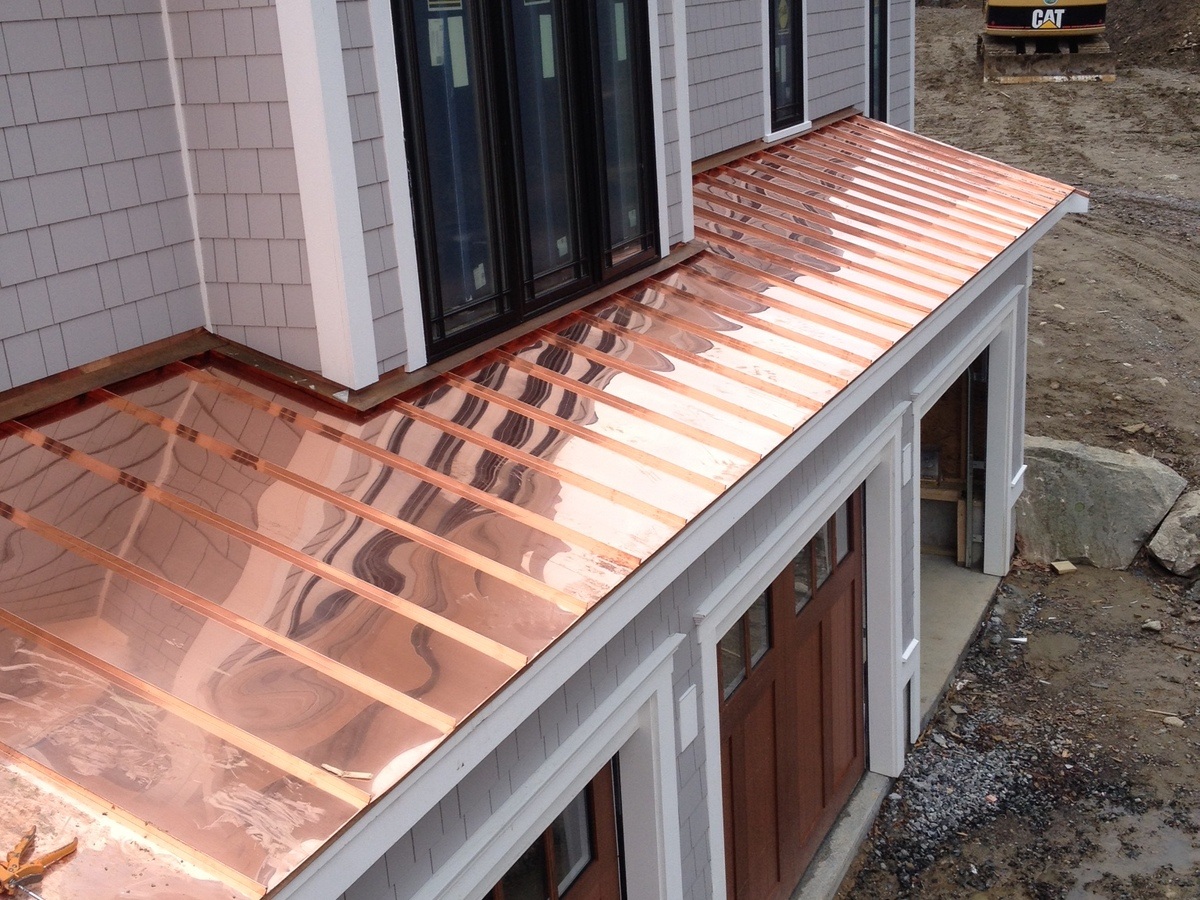
As a roofing-focused contractor, we look at siding through the lens of water management: proper housewrap, kickout flashing where rooflines meet walls, step flashing at sidewalls, correctly integrated window/door flashing, and gutters/downspouts that move water away from the foundation.
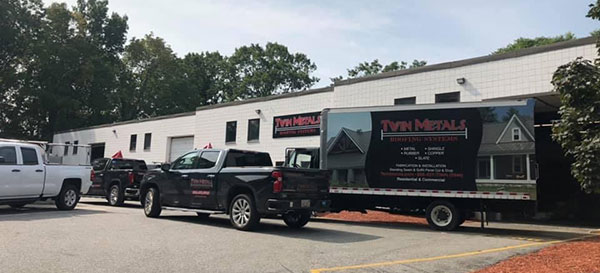
I’m Tom Gordon, owner of Twin Roofing, a division of Twin Metals, Inc. Since founding Twin Metals in 2007, I’ve worked with New England homeowners on exterior protection projects, and I know how important it is that siding details integrate correctly with the roof and gutter system.
Benefits of Investing in New Exterior Siding Lowell
Investing in new Exterior siding Lowell can improve appearance, but the biggest value is performance—especially when it’s installed and detailed to work seamlessly with your roofing and gutter system.
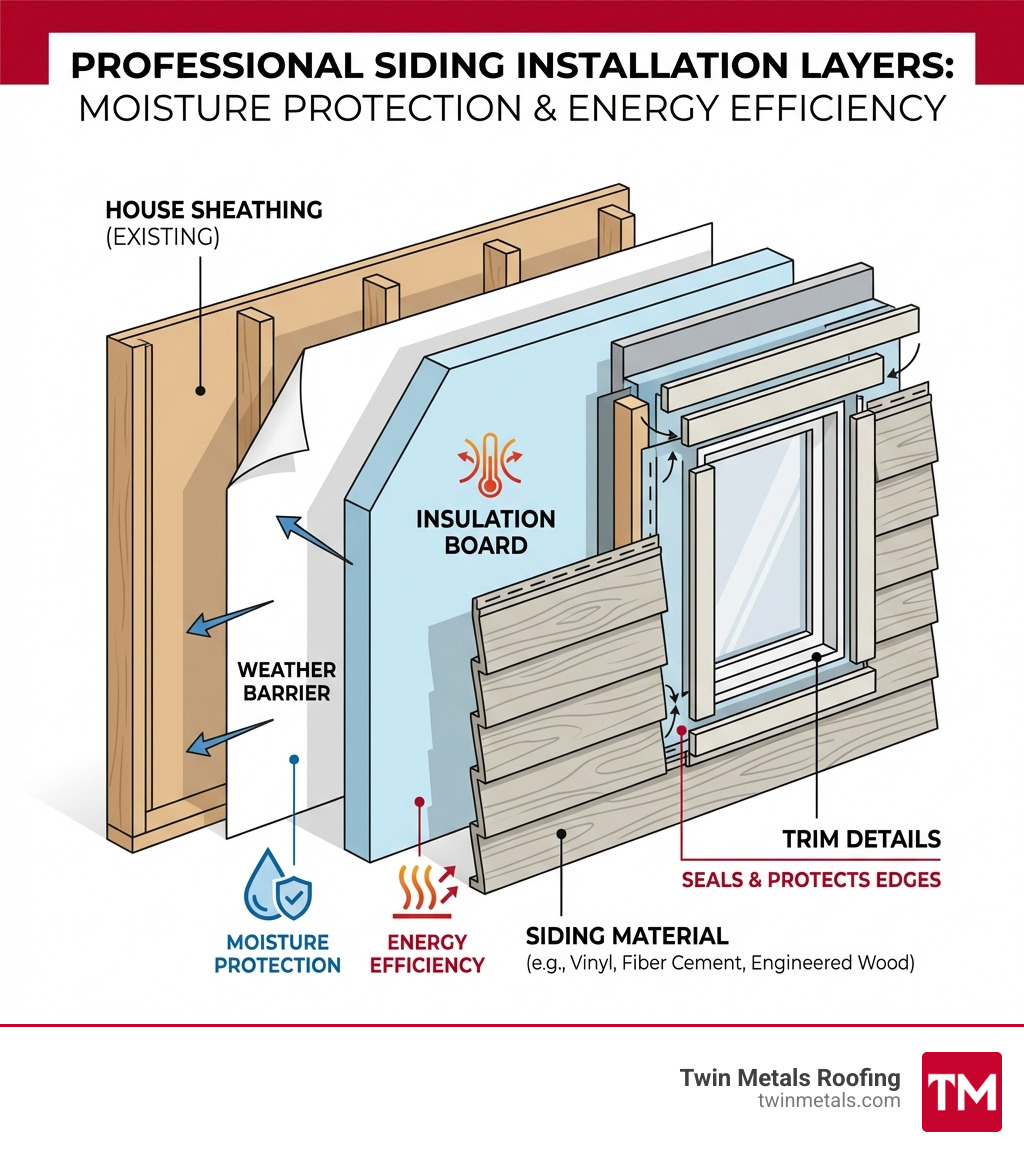
One key benefit is improved energy efficiency. Older, damaged, or poorly detailed siding can allow air leakage and moisture intrusion that undermine insulation performance. New siding installed with a proper weather-resistive barrier and well-sealed penetrations helps support a tighter building envelope.
New siding also improves water management and durability when paired with correct flashing and drainage details. In Lowell’s climate, wind-driven rain and snow loads make it critical that roof-to-wall transitions, window/door openings, and trim details are properly integrated. When these components are handled correctly, you reduce the likelihood of hidden moisture issues and extend the life of adjacent exterior materials.
Finally, modern siding options can offer reduced maintenance, depending on the material. Just as importantly, it’s a good time to evaluate gutters, downspouts, and roof flashing—because many of the most common leak points occur where these systems meet.
For more information on our exterior water-management services, including gutters, siding-related details, and soffits, visit our siding services page. You can also learn more about siding materials and best practices from the U.S. Department of Energy’s guide to wall Insulation.
Popular Siding Materials for Massachusetts Homes
When considering Exterior siding Lowell, you’ll find a variety of materials, each with its unique characteristics, benefits, and aesthetic appeal. Choosing the right one depends on your budget, desired look, and maintenance preferences. Here’s a comparison of some popular options suitable for Massachusetts homes:
| Material | Durability | Aesthetic Versatility | Maintenance | Impact Resistance | Energy Efficiency | Sustainability |
|---|---|---|---|---|---|---|
| Vinyl Siding | Resists sun fading, rust, corrosion, weather | Wide range of colors, patterns, textures (e.g., wood grain) | Low (pressure wash) | Good | Good (especially insulated) | Recyclable, but made from PVC |
| Fiber Cement | Highly durable, fire-resistant, weather-resistant | Mimics wood, stone, stucco; diverse colors, textures | Low | Excellent | Good | Long lifespan reduces waste, but manufacturing can be energy-intensive |
| Engineered Wood | Resists extreme temperatures, humidity, impacts | Warmth and beauty of natural wood, various profiles | Low | Excellent | Good | Often uses sustainable wood sources (e.g., LP SmartSide uses SmartGuard process), with less maintenance than natural wood |
| Western Red Cedar | Natural resistance to insects, decay, weather | Warm hues, rich grain, natural beauty; can age to silvery-grey | Moderate (staining/sealing) | Good | Good | Renewable, recyclable, biodegradable; responsibly harvested from certified forests |
Vinyl Siding: A Cost-Effective Choice for Exterior siding Lowell
Vinyl siding remains an incredibly popular choice for homeowners in Lowell due to its impressive balance of affordability, durability, and low maintenance. It’s a versatile material that offers a long-lasting solution against New England’s weather challenges.
One of the biggest draws of vinyl siding is its low maintenance requirements. Unlike wood, it never needs painting, scraping, or staining. A simple pressure wash is usually all it takes to keep it looking fresh and clean. This frees up valuable time and saves money on upkeep over the years.
Modern vinyl siding boasts an impressive color variety and can be customized in virtually any color, allowing for dynamic style mixing and matching. It comes in various patterns and profiles, including options with improved shadow lines that beautifully mimic the look of real wood. Many high-quality vinyl products are also designed with fade resistance, ensuring your home’s vibrant color lasts for decades, often backed by warranties.
For improved performance, consider insulated vinyl siding. This option comes with a foam backing that significantly boosts your home’s energy efficiency, contributing to a more comfortable indoor environment and lower utility bills. Features like double-lap profiles and reinforced nail hems provide extra strength and wind resistance, making it a robust choice for protecting your home against strong winds and impacts from debris.
Fiber Cement and Engineered Wood Options for Exterior siding Lowell
While vinyl offers fantastic value, other materials like fiber cement and engineered wood provide distinct advantages, particularly for those seeking specific aesthetics or improved performance.
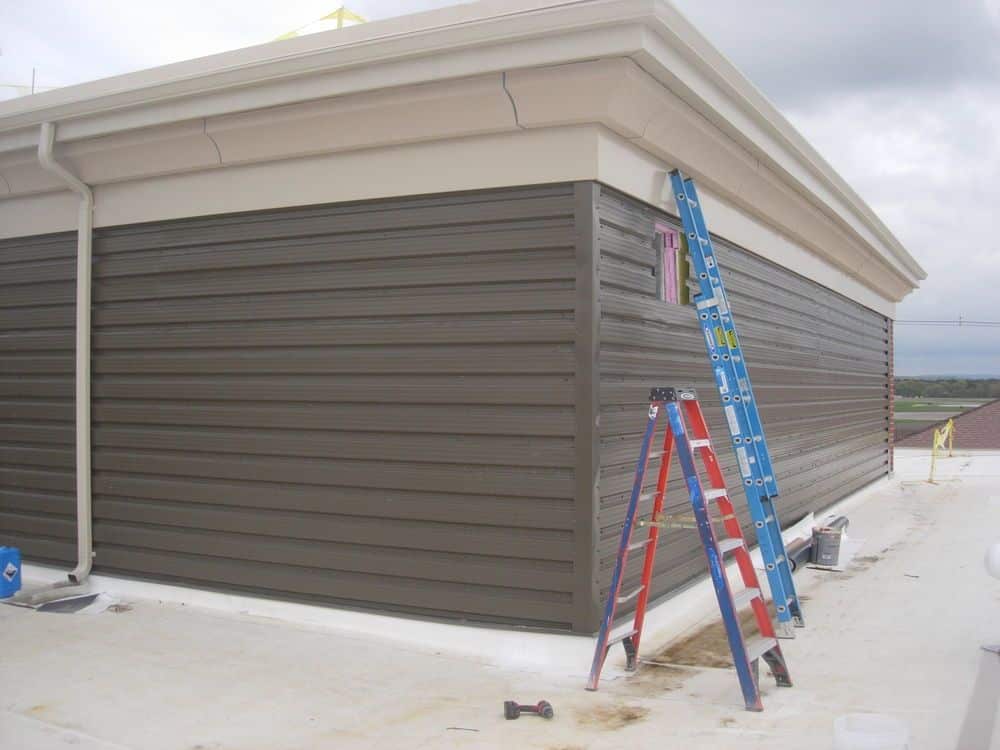
Fiber cement siding, notably brands like James Hardie, is renowned for its exceptional durability and ability to mimic other materials, such as wood, stone, or stucco, with incredible realism. It’s a premium material known for its fire resistance and ability to withstand harsh weather conditions, making it a very robust option for Massachusetts homes. Installing fiber cement requires highly trained and certified experts to ensure proper installation and longevity.
Engineered wood siding, such as LP SmartSide, offers the warmth and beauty of natural wood without the extensive maintenance. This material is manufactured using advanced processes that make it incredibly durable and resistant to extreme temperatures, high humidity, and arctic freeze-thaws. It often features a realistic wood-grain texture and comes in various profiles and neat colors. Engineered wood provides excellent moisture resistance and impact resistance, making it a low-maintenance, high-performance alternative to traditional wood siding.
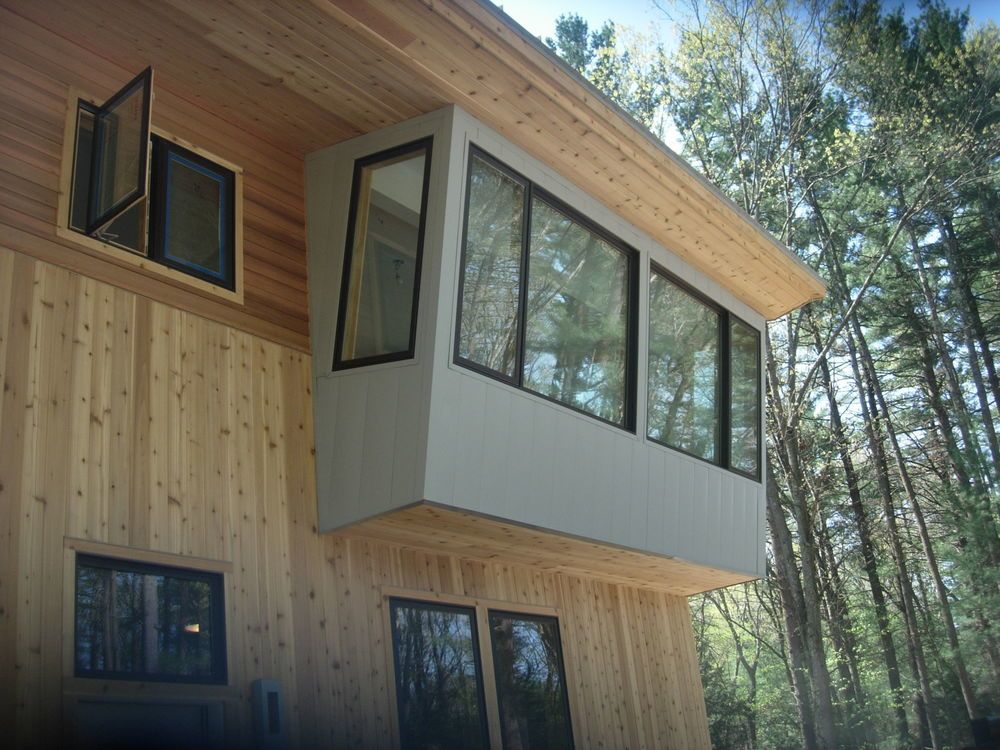
For those who appreciate the genuine article, Western Red Cedar bevel siding stands out for its warm hues, rich grain, and natural beauty. This natural wood siding offers timeless elegance and long-lasting performance. Western Red Cedar is inherently resistant to insects and decay, reducing maintenance needs compared to other wood types. It’s also a sustainable choice, often sourced from responsibly managed forests, and is renewable, recyclable, and biodegradable. You can choose to let it age naturally to a beautiful silvery-grey patina or apply a protective stain to improve its natural tones.
Signs Your Home Needs Siding Replacement
Your siding is one layer of your home’s exterior defense, but it relies on correct roofing, flashing, and gutter performance to do its job. If you notice the issues below, it’s wise to schedule a professional evaluation—especially at roof-to-wall intersections and around penetrations where water commonly enters.
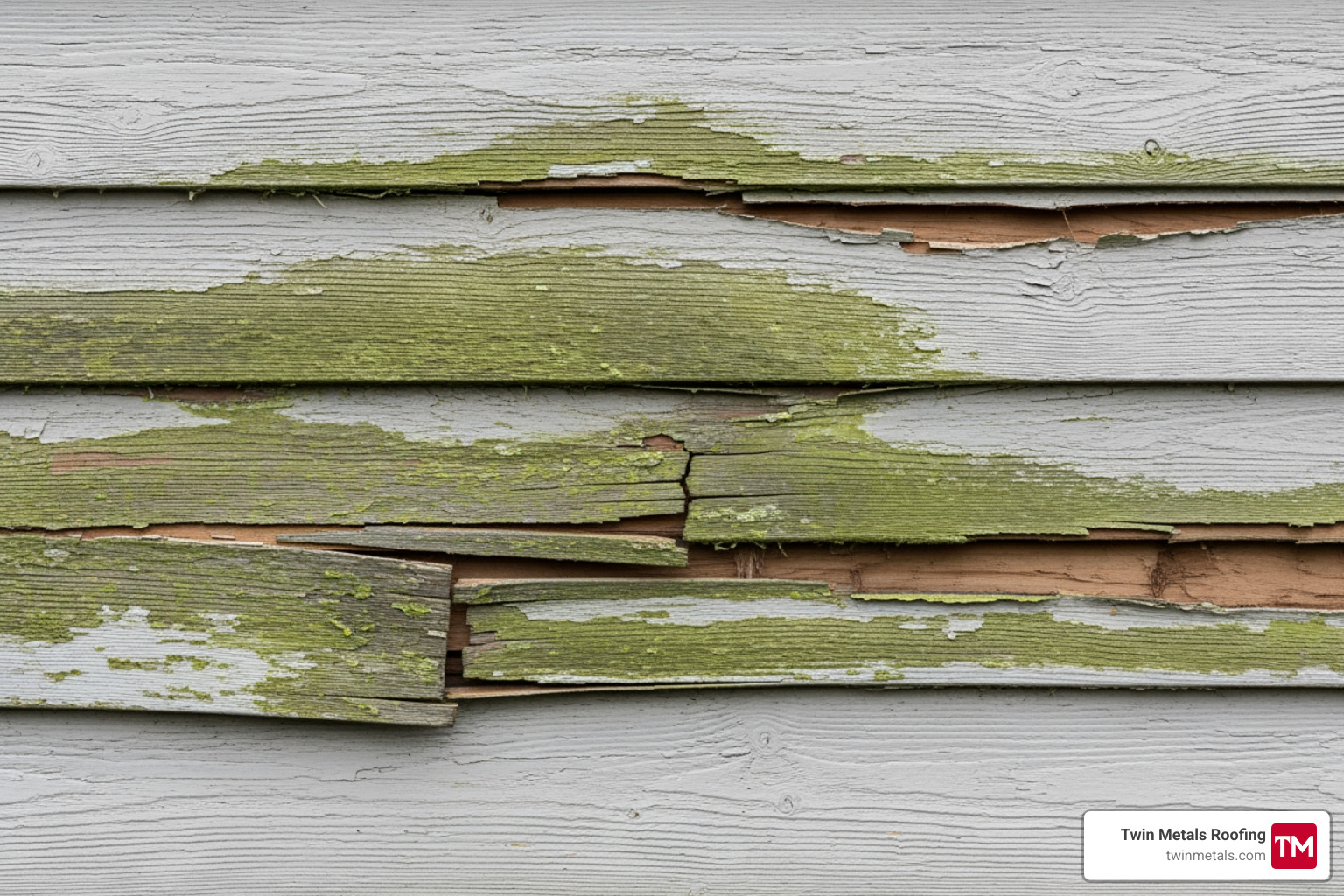
- Cracks and Warping: Openings can allow water behind the cladding, especially during wind-driven rain. Warping may also point to installation or ventilation issues.
- Persistent Mold or Mildew: Recurring growth can indicate trapped moisture—sometimes caused by failing caulking, missing flashing, or improper drainage paths.
- Interior Water Stains Near Exterior Walls: Stains can originate from roof flashing failures, clogged/overflowing gutters, or compromised siding/wrap details.
- Loose or Missing Panels: Exposed areas are vulnerable to water intrusion and wind damage and should be addressed quickly.
- Rot at Trim or Sheathing Edges: Rot near rooflines, chimneys, or window/door openings often ties back to flashing or gutter discharge problems.
If you observe any of these signs, a contractor should inspect the full exterior water-shedding system—roofing, flashing, and gutters—along with the siding to identify the true source of the problem.
Costs, Permits, and Financing for Exterior siding Lowell
Undertaking an Exterior siding Lowell project is a significant investment, and understanding the financial and regulatory aspects is crucial.
Average Costs: The cost of new siding can vary widely based on the material chosen, the size and complexity of your home, and the specific contractor.
Note: The prices below are average estimates based on publicly available internet data, not Twin Roofing’s actual pricing. Your project cost may be different based on scope, materials, and site conditions.
For an average-sized, two-story home in Lowell, a complete siding replacement is often discussed in a wide range of approximately $21,000 to $63,438+.
Building Permits: When replacing siding in Lowell, MA, building permits are required. This helps ensure the work complies with local building codes and safety standards. Always confirm that your chosen contractor will secure all necessary permits before work begins.
HOA Regulations and Local Guidelines: Beyond city permits, homeowners in Lowell must also comply with any applicable State of Massachusetts, Middlesex County, historic district, or Homeowners’ Association (HOA) guidelines that may affect materials and colors.
Financing Options: Many exterior contractors offer financing options that may include short-term promotional plans or longer-term monthly payment plans. Ask your contractor to explain terms, qualification requirements, and total cost over time so you can compare options clearly.
Frequently Asked Questions about Siding in Lowell
How does siding contribute to a home’s energy efficiency?
Siding plays a crucial role in your home’s energy performance by creating a protective envelope that helps regulate indoor temperatures. Modern siding materials, particularly insulated siding, significantly improve this capability. This type of siding often incorporates a foam backing, which boosts the material’s R-value—a measure of its thermal resistance. A higher R-value means better insulation, leading to less heat transfer through your walls.
By forming a robust barrier, new siding minimizes heat loss prevention during colder months and prevents heat gain during warmer periods. It also helps block drafts and reduces thermal bridging, which occurs when heat escapes or enters through studs and other structural components. The result is more regulated indoor temperatures, reducing the workload on your HVAC system and translating into noticeable savings on your energy bills. Essentially, quality siding makes your home a cozier, more cost-effective place to live year-round.
What are the differences between vinyl and fiber cement siding?
Vinyl and fiber cement are two of the most popular siding materials, each with distinct characteristics that appeal to different homeowners. Understanding their differences can help you make an informed decision for your Exterior siding Lowell project.
- Maintenance Requirements:
- Vinyl Siding: Known for its extremely low maintenance. It never needs painting or caulking and can typically be cleaned with just soap and water or a pressure wash. It’s designed to resist sun fading, rust, and corrosion.
- Fiber Cement Siding: Also considered low maintenance, but it does require occasional painting (typically every 10-15 years) to keep it looking its best, similar to traditional wood. It holds paint exceptionally well.
- Installation Complexity:
- Vinyl Siding: Generally lighter and easier to install, which can contribute to faster installation times and potentially lower labor costs.
- Fiber Cement Siding: Heavier and requires specialized tools and expertise for proper installation. It’s a premium material that often requires highly trained and certified experts.
- Fire Ratings:
- Vinyl Siding: While it won’t ignite easily, vinyl can melt or warp under extreme heat.
- Fiber Cement Siding: Offers excellent fire resistance, making it a preferred choice in areas where fire safety is a significant concern.
- Cost Comparisons:
- Vinyl Siding: Typically the more affordable option upfront, offering a cost-effective way to boost curb appeal and durability.
- Fiber Cement Siding: Generally has a higher material and installation cost but offers superior durability and a longer lifespan, potentially providing better long-term value.
- Aesthetics:
- Vinyl Siding: Offers a wide range of colors, patterns, and textures, including those that mimic wood grain.
- Fiber Cement Siding: Excels at replicating the look of natural wood, stone, or stucco, providing a very authentic and high-end appearance.
Are there specific regulations for siding in Lowell?
Yes, when planning an Exterior siding Lowell project, be aware of and comply with specific local regulations. Ignoring these can lead to delays, fines, or even the requirement to redo work.
- Building Permits: As mentioned earlier, building permits are required for siding replacement projects in Lowell. This process ensures that your project meets the city’s structural, safety, and aesthetic standards. A reputable contractor will typically handle securing these permits on your behalf.
- Historic District Guidelines: Lowell, like many historic New England towns, may have specific guidelines for homes located within designated historic districts. These guidelines often dictate acceptable materials, colors, and architectural styles to preserve the area’s historical integrity. Always check if your property falls within such a district.
- HOA Color Restrictions: If your home is part of a Homeowners’ Association (HOA), you will likely be subject to their specific rules regarding exterior modifications. HOAs often have strict color restrictions and may require approval for any changes to exterior materials or appearances. It’s crucial to consult your HOA’s covenants before selecting your new siding.
- Local Safety Codes: Beyond permits, all work must adhere to general local safety codes. This includes proper installation techniques, ensuring the siding is securely fastened, and that any necessary fire-resistant properties (especially for certain materials) are met.
Always communicate with your contractor about these regulations, and if you’re unsure, contact the Lowell City Planning Department or your HOA directly.
Conclusion
Upgrading your Exterior siding Lowell can be a smart investment in exterior performance—especially when siding details are coordinated with the roof, flashing, and gutter system that controls water from the top down. Whether you choose vinyl, fiber cement, or engineered wood, the long-term results depend on correct installation and proper integration at rooflines, windows/doors, and trim.
At Twin Roofing, we focus on building-envelope protection and water management. If you’re planning exterior updates, it’s a good time to evaluate roof condition, flashing details, and gutter performance so all components work together.
Twin Roofing installs asphalt roofs in MA and NH. The company services Berkshire County in Eastern Massachusetts and Southern New Hampshire.