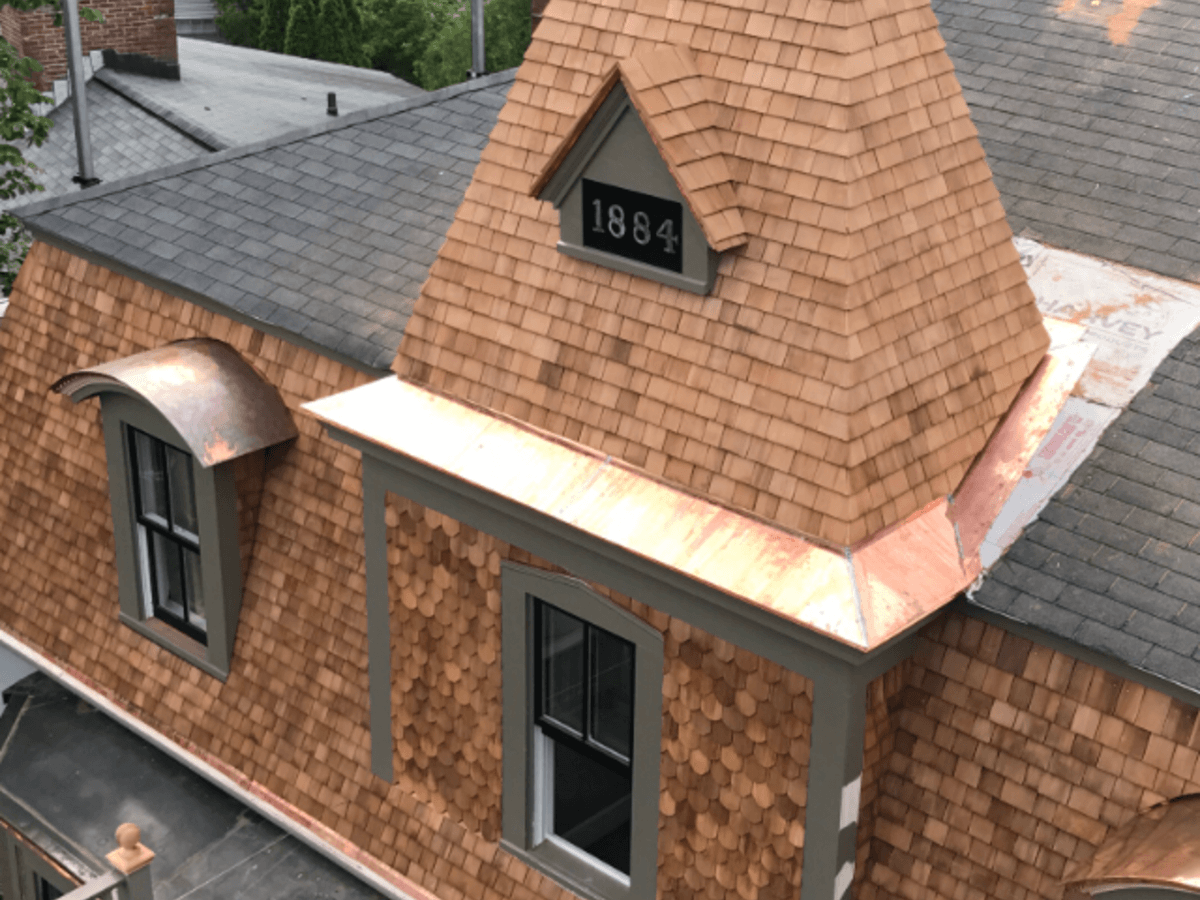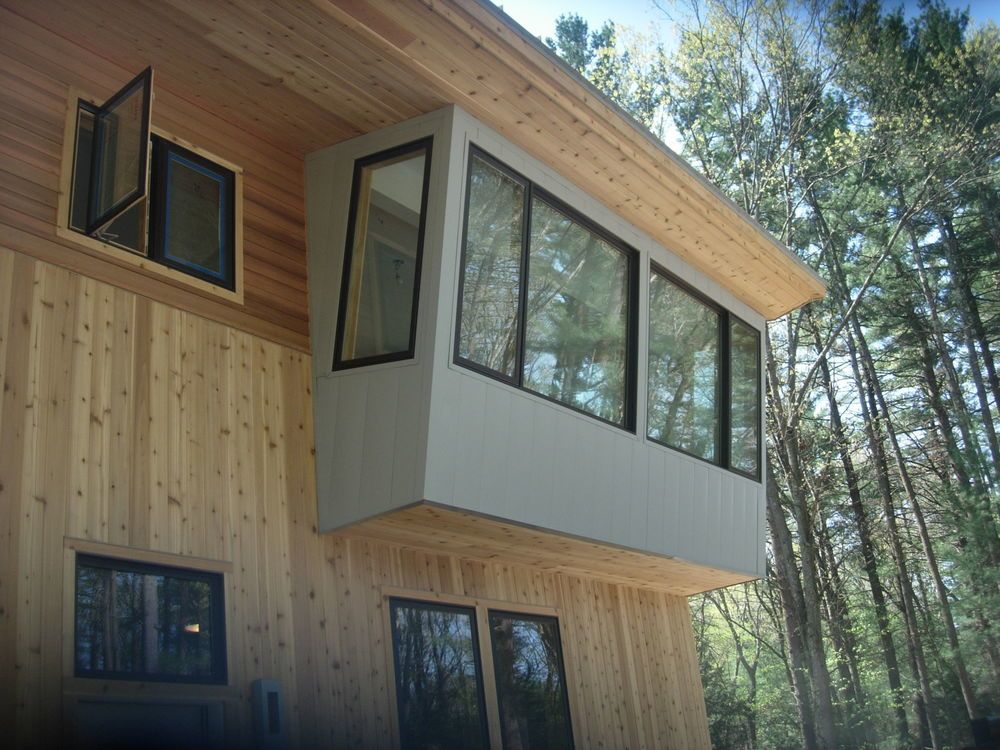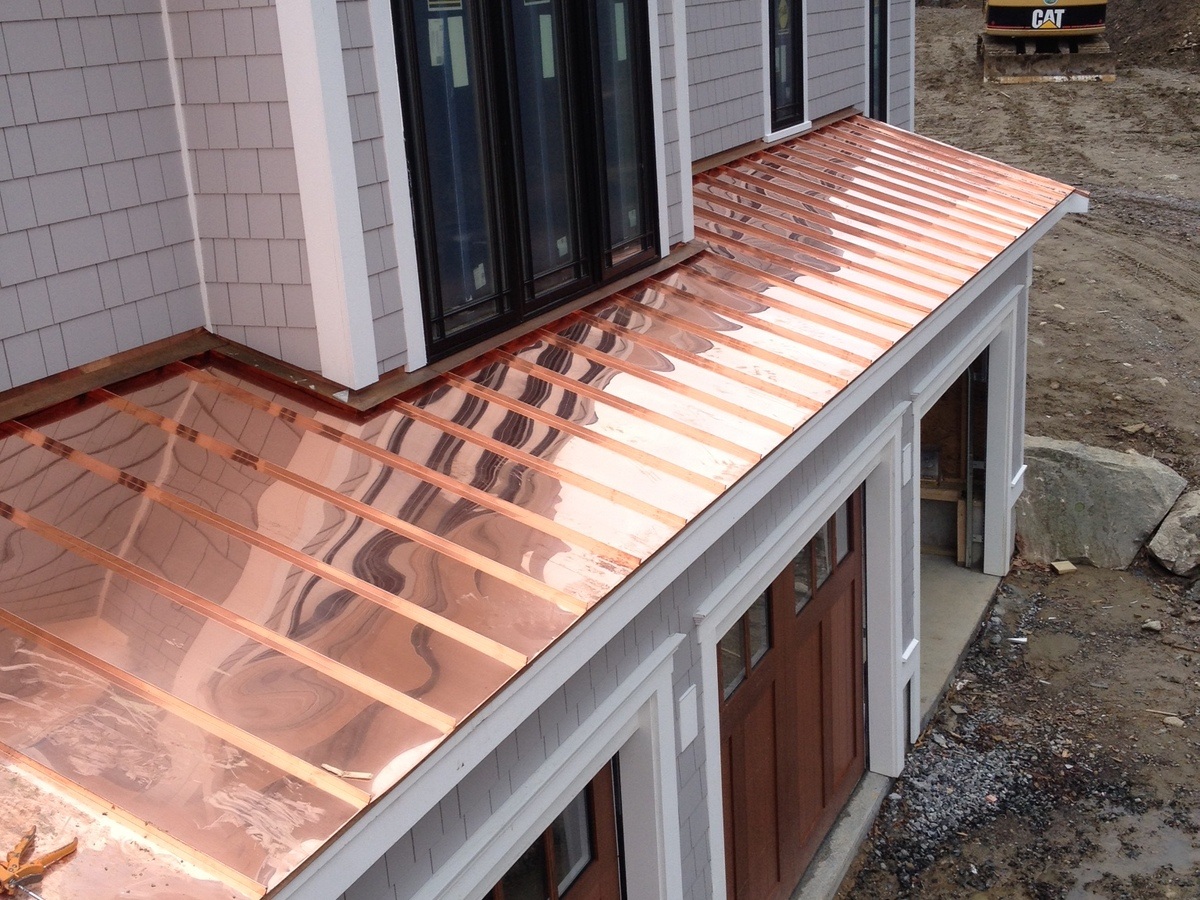

Why Cedar Shake Siding Stands Out in New England
Cedar shake siding offers a timeless, rustic aesthetic that improves curb appeal while providing natural insulation. For New England homeowners, it is a premier choice for weather protection.
Quick Overview of Cedar Shake Siding:
- Material: Split cedar logs (Western Red or Eastern White Cedar)
- Lifespan: 20-40 years with maintenance
- Cost Range: $6-$45 per square foot installed (based on publicly available data)
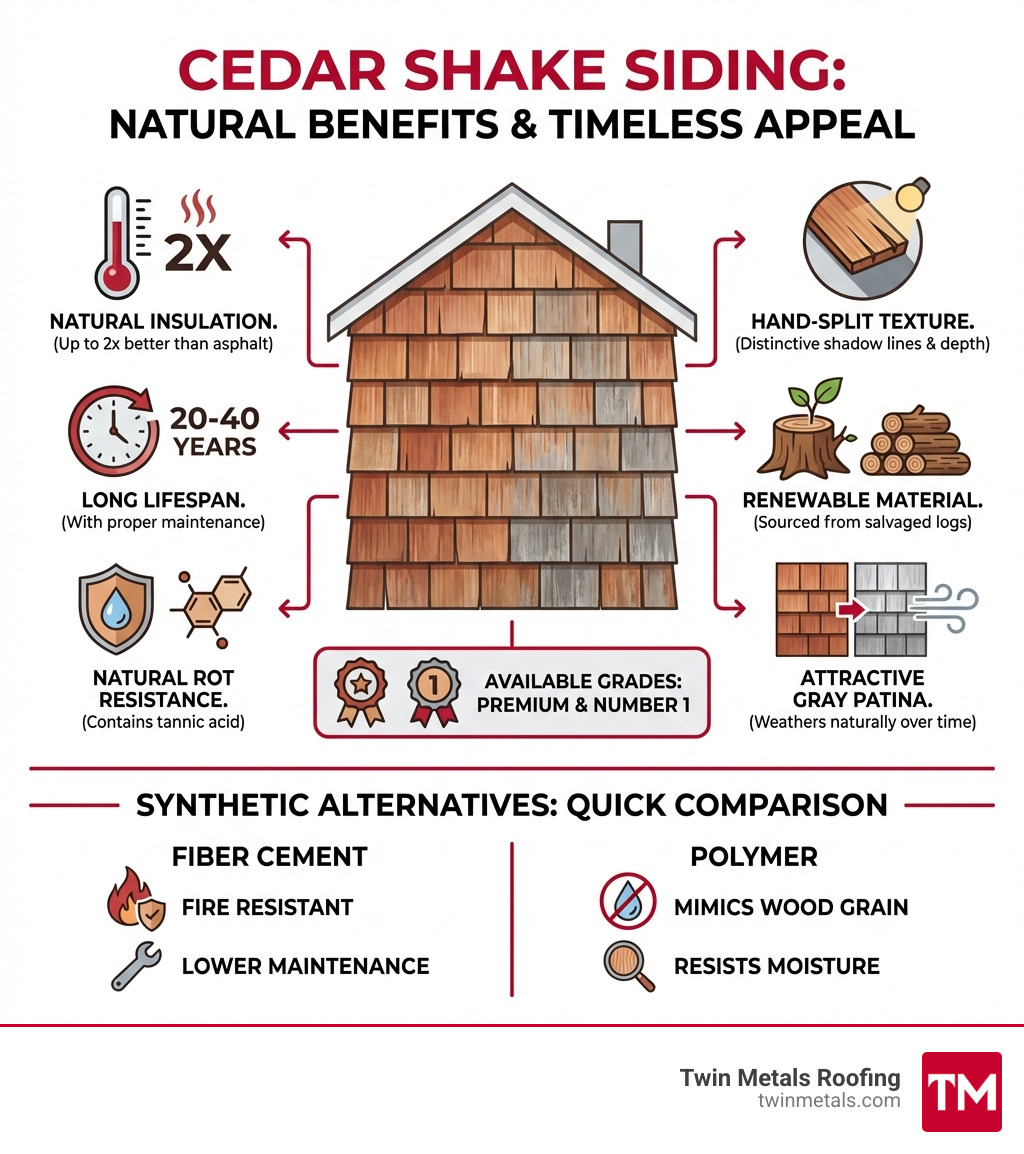
- Key Benefits: Natural beauty, 2x the insulation of synthetic materials, rot resistance
- Maintenance: Annual inspections, cleaning every 3-5 years, re-staining
Cedar naturally resists rot and insects due to compounds like tannic acid. However, it requires more attention than vinyl. You must plan for regular maintenance and understand the natural graying process.
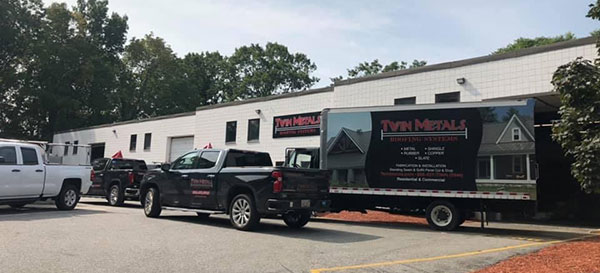
I’m Tom Gordon, owner of Twin Roofing, a division of Twin Metals, Inc. With nearly two decades of experience in Massachusetts and New Hampshire, I help property owners balance traditional craftsmanship with modern building science. Whether restoring a historic home or building new, understanding cedar’s performance is key to a successful installation.
Defining Cedar Shake Siding: Characteristics and Grades
Cedar shake siding is crafted from split cedar logs, offering a rustic, hand-hewn texture. Unlike sawn shingles, shakes have an irregular surface that creates deep shadow lines. This design provides excellent protection for homes in Massachusetts and Southern New Hampshire.
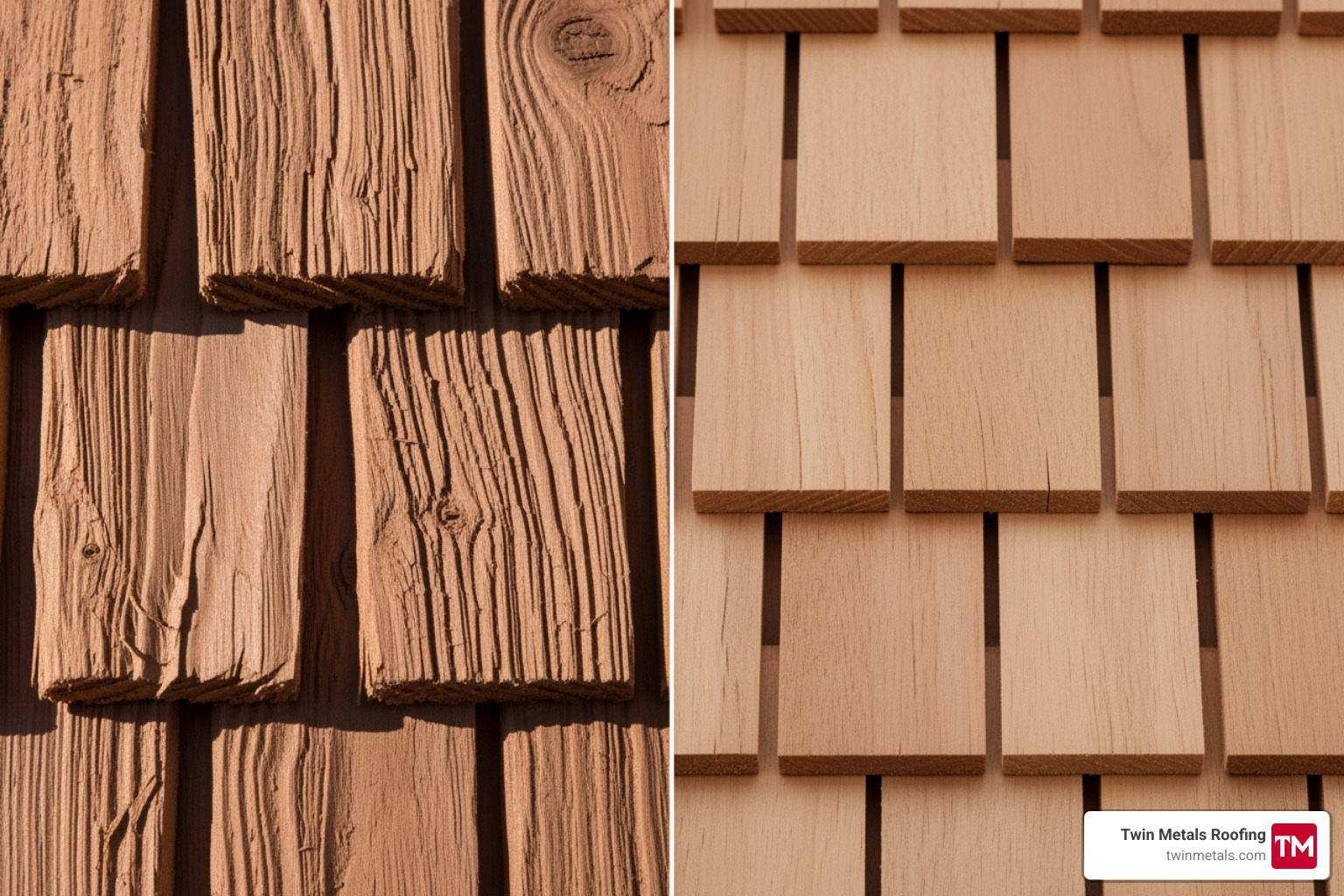
Certi-Sawn® Tapersawn Cedar Shakes are a popular hybrid, sawn on both faces but thicker than shingles. This allows for a two-ply application with a pronounced shadow line. More details are available in the Certi-Sawn® Tapersawn Cedar Shakes documentation.
Understanding Wood Grades
- Premium Grade: 100% clear faces with no flat grain. These are the most stable and uniform shakes.
- Number 1 Grade (Blue Label): High quality, allowing up to 20% flat grain. A great balance of value and durability.
- Number 2 Grade (Red Label): Permits some knots and sapwood; ideal for a more rustic look or secondary buildings.
- Number 3 & 4 Grades: Utility grades used for sheds or as undercoursing.
Shakes vs. Shingles
- Cedar Shakes: Traditionally split, resulting in a rough, varied thickness. They offer a rugged, craftsman-style aesthetic.
- Cedar Shingles: Sawn on both sides for a smooth, uniform surface. They are available in standard lengths like “Perfection” (18 inches) and provide a more refined, custom appearance.
Material Options: Natural Wood and Synthetic Alternatives
Homeowners in Massachusetts and Southern New Hampshire can choose between natural cedar and advanced synthetic alternatives.
| Feature | Natural Cedar Shake Siding | Fiber Cement Siding | Polymer/Synthetic Siding |
|---|---|---|---|
| Material | Western Red/Eastern White Cedar | Sand, cement, cellulose | Vinyl, polypropylene |
| Aesthetics | Authentic, deep shadow lines | Mimics wood grain | Highly realistic grain |
| Durability | 20-40 years (with maintenance) | Fire-resistant, resists rot | Resists moisture/fading |
| Maintenance | High (staining, cleaning) | Low | Very Low |
| Cost (Materials) | Higher | Moderate to High | Moderate to High |
| Fire Resistance | Can be treated | Excellent | Generally good |
For more information on our siding services, visit our More info about siding services page.
Synthetic Cedar Shake Siding
- Fiber Cement Siding: Products like Hardie Shingle are non-combustible and resist rot and pests, making them ideal for New England’s harsh winters.
- Polymer/Vinyl Siding: Brands like Foundry and Kaycan offer shingles molded from real cedar. Kaycan’s Perfection Shingles can withstand 220 mph winds and offer superior fade resistance.
Treated Wood Products
- Certi-Last®: Pressure-treated with preservatives to resist decay, moss, and mildew. Recommended for humid climates.
- Certi-Guard®: Pressure-impregnated with fire-retardants to achieve Class A, B, or C fire ratings. These weather to a natural gray and are safe for use near copper roofing.
Performance Factors and Longevity
Well-maintained cedar shake siding can last 20 to 40 years. Longevity depends on installation quality, detailing at transitions, and environmental exposure. In New England, the biggest threats are not usually the wood itself, but repeated wetting and slow drying caused by poor drainage, insufficient clearance, or trapped debris.
Cedar naturally weathers to a silver-gray patina within a year, eventually turning a darker graphite gray. That color change is normal UV weathering, not a sign of failure. What matters for long-term performance is how quickly the siding can shed bulk water and dry after rain, snow, and freeze-thaw cycles.
In Massachusetts and Southern New Hampshire, moisture management is critical. While cedar tannins provide natural protection, improper ventilation or debris accumulation can lead to mold or rot, especially on shaded elevations and near roof-to-wall intersections. This is also where roof and gutter details play an outsized role: correctly sized gutters, clean downspouts, and kickout flashing help keep runoff off the wall and prevent chronic saturation. For detailed care guidance, see The Care and Maintenance of Wood Shingle and Shake Roofs.
Maximizing Lifespan
- Annual inspections: Check for loose shakes, open joints, and early signs of moss or algae, especially beneath eaves and near valleys where roof runoff concentrates.
- Moisture control: Trim vegetation at least two feet away from siding, keep gutters clean, and confirm downspouts discharge away from the foundation.
- Drying and drainage: Maintain proper clearances from roofs, decks, and grade so the butt ends do not stay wet.
- Proper installation: Use a weather-resistant barrier like DuPont Tyvek to direct incidental moisture away from the structure, and ensure all roof-to-wall transitions are properly flashed.
Environmental Impact
Cedar is a renewable resource. Many manufacturers use salvaged logs, which helps reduce waste and can support responsible forest management. From a building-science perspective, cedar also offers real-world efficiency benefits: when installed over a proper water-resistive barrier and detailed to stay dry, wood cladding can contribute to a durable, energy-efficient wall system with a lower end-of-life impact than many non-biodegradable materials.
Professional Installation Requirements
Professional installation is vital for the longevity of cedar shake siding. In New England, moisture protection is the top priority, and the best results come from treating siding as part of a complete exterior system that includes roofing, flashing, and gutters.
Weather-Resistant Barriers
We install high-quality weather-resistant barriers (WRB), such as DuPont Tyvek, over sound exterior sheathing. For re-walling, we use No. 30 felt underlayment with proper overlaps and flashing around all openings. Just as importantly, we detail roof-to-wall intersections so water is directed into the gutter system instead of behind the siding.
Because Twin Metals Roofing works on both siding-related water management and roof systems, we also provide residential roofing services to ensure your home is protected from the top down, including proper flashing and drainage at critical transitions.
Fastener Selection
- Corrosion resistance: Within 15 miles of the coast, we use Type 316 stainless steel. Inland, we use Type 304 stainless steel or hot-dipped galvanized fasteners. We avoid electro-galvanized fasteners, which can corrode faster and cause staining.
- Technique: Fasteners must penetrate sheathing by 3/4 inch and be driven flush to avoid damaging the wood fibers.
- Placement matters: Correct nail placement helps prevent splitting and improves holding power as the cedar expands and contracts through seasonal humidity changes.
Layout and Spacing
Cedar expands and contracts. We maintain keyway spacing of 1/8 to 1/2 inch depending on the material grade. We ensure a 1/2 inch clearance from surfaces below to prevent water wicking and use a 1 1/2 inch side lap between joints for maximum weather protection.
For long-term durability in Massachusetts and Southern New Hampshire, we also pay close attention to the areas most likely to see water: below rooflines, beneath valleys, and near downspouts. When these areas are correctly detailed with flashing and supported by well-functioning gutters, cedar siding stays drier, cleaner, and more stable over time.
Maintenance and Investment Costs
Cedar shake siding requires a commitment to maintenance to prevent weathering degradation, fungal attack, and moss growth. In New England, the most effective maintenance plan is the one that keeps water off the walls: clean gutters, good drainage, and prompt repair of flashing issues.
Professional Maintenance
- Cleaning: Use a mild detergent or a 4:1 water-to-bleach mixture for dirt and mildew. For stubborn mold, a TSP or oxalic acid solution may be required.
- Pressure washing: Use extreme caution. Keep pressure under 500 psi and always spray downwards with the grain.
- Re-staining: Semi-transparent finishes typically need reapplication every 3 to 5 years, while painted cedar can last 12 to 15 years.
- Prevent recurring saturation: Keep gutters flowing, extend downspouts away from the home, and correct any roof runoff that is dumping onto a single wall section. These steps reduce staining, cupping, and early decay.
Average Project Costs
Note: These are average costs based on publicly available internet data, not the Client’s actual pricing.
- Material costs: Average materials range from $3 to $15 per square foot.
- Installation labor: Labor typically ranges from $30 to $100 per hour.
- Total project range: The overall cost for a project can range from $6 to $45 per square foot.
- Additional expenses: Removal of old siding can add $2,500+, and initial staining can cost $1.50 to $4 per square foot.
For a precise estimate for your home, Request a professional estimate.
Frequently Asked Questions about Cedar Siding
How often does cedar siding need to be stained?
It depends on the finish. Painted siding lasts 12-15 years, semi-transparent stains need attention every 3-5 years, and oil-based natural finishes may require reapplication every 1-2 years initially.
Can you pressure wash cedar shakes?
Yes, but only with low pressure (under 500 psi). High pressure can fracture the wood and drive water into the wall cavity. Gentler cleaning with a soft brush and a bleach solution is usually safer.
Does cedar siding attract pests or rot?
Cedar’s natural tannic acids resist rot and insects. However, it is not immune. Prolonged moisture from poor installation or neglected maintenance can still lead to decay. Proper ventilation and treated products like Certi-Last® can mitigate these risks.
Conclusion
Cedar shake siding offers best beauty and insulation for Massachusetts and Southern New Hampshire homes. While it requires maintenance, its durability and rustic charm make it a premier investment. At Twin Metals Roofing, we specialize in high-quality cedar installations and also install asphalt roofs in MA and NH.
Request a professional estimate
Twin Metals Roofing services Berkshire County in Eastern Massachusetts and Southern New Hampshire.
Follow us on Facebook — https://www.facebook.com/twinmetalsroofing
Follow u son Instagram – https://www.instagram.com/twinmetals/