
Understanding Hot Tar Roofing: A Time-Tested Commercial Solution
Hot tar roofing is a traditional built-up roofing (BUR) system used primarily on commercial flat and low-slope roofs, where heated asphalt is applied in multiple layers with reinforcing felts to create a durable, waterproof membrane. This roofing method has been in use in North America for over 100 years and remains a viable option for certain commercial applications.
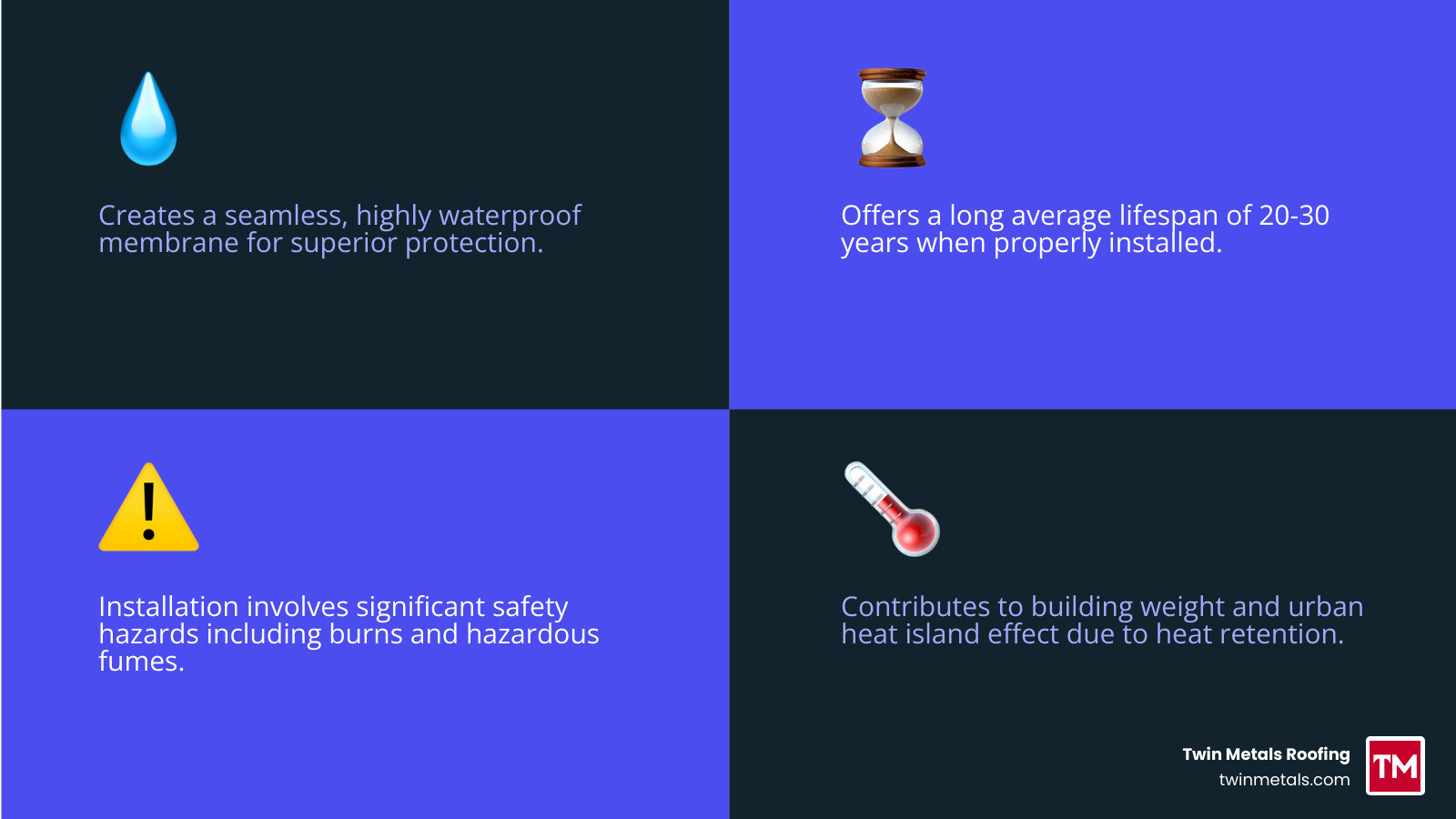
Key Facts About Hot Tar Roofing:
- What it is: Multiple layers of asphalt-impregnated felt alternated with hot liquid asphalt (bitumen), typically topped with gravel
- Average lifespan: 20-30 years when properly installed and maintained
- Best for: Commercial buildings with flat or low-slope roofs requiring superior waterproofing
- Installation: Requires specialized equipment (kettles) and trained professionals to heat asphalt to 400-550°F
- Main advantage: Creates a seamless, highly waterproof membrane
- Main drawback: Installation involves significant safety hazards including burn risks and hazardous fumes
If you’re a property owner in Massachusetts or New Hampshire considering roofing options, understanding hot tar roofing helps you make an informed decision—though many modern alternatives now offer safer installation and better energy efficiency.
The process, known as “hot mopping,” involves applying heated liquid asphalt with mops. Roofers then roll asphalt-impregnated felt layers into the tar, building up a multi-ply, leak-proof membrane. A final “flood coat” of hot asphalt embeds gravel for UV protection and fire resistance.
Its longevity stems from its seamless, multi-layer application, which provides continuous waterproofing superior to single-ply membranes with failure-prone seams.
However, installation is hazardous. Asphalt is heated to 400-550°F, creating burn risks and toxic fumes. This work requires certified, insured professionals with specialized training and safety equipment.
Twin Metals Roofing specializes in asphalt shingle and metal roofing systems for both residential and commercial properties in MA and NH, offering modern alternatives that provide excellent durability with safer installation processes.
What is a Hot Tar Roof and How is it Installed?
Hot tar roofing, also known as Built-Up Roofing (BUR), is a time-tested, multi-ply system used for over a century. It requires professional installation and has a long track record of robust performance on commercial flat and low-slope roofs.
The Anatomy of a Built-Up Roof (BUR) System
A hot tar roof (BUR system) is a layered structure designed for maximum waterproofing and durability, with each layer playing a crucial role.
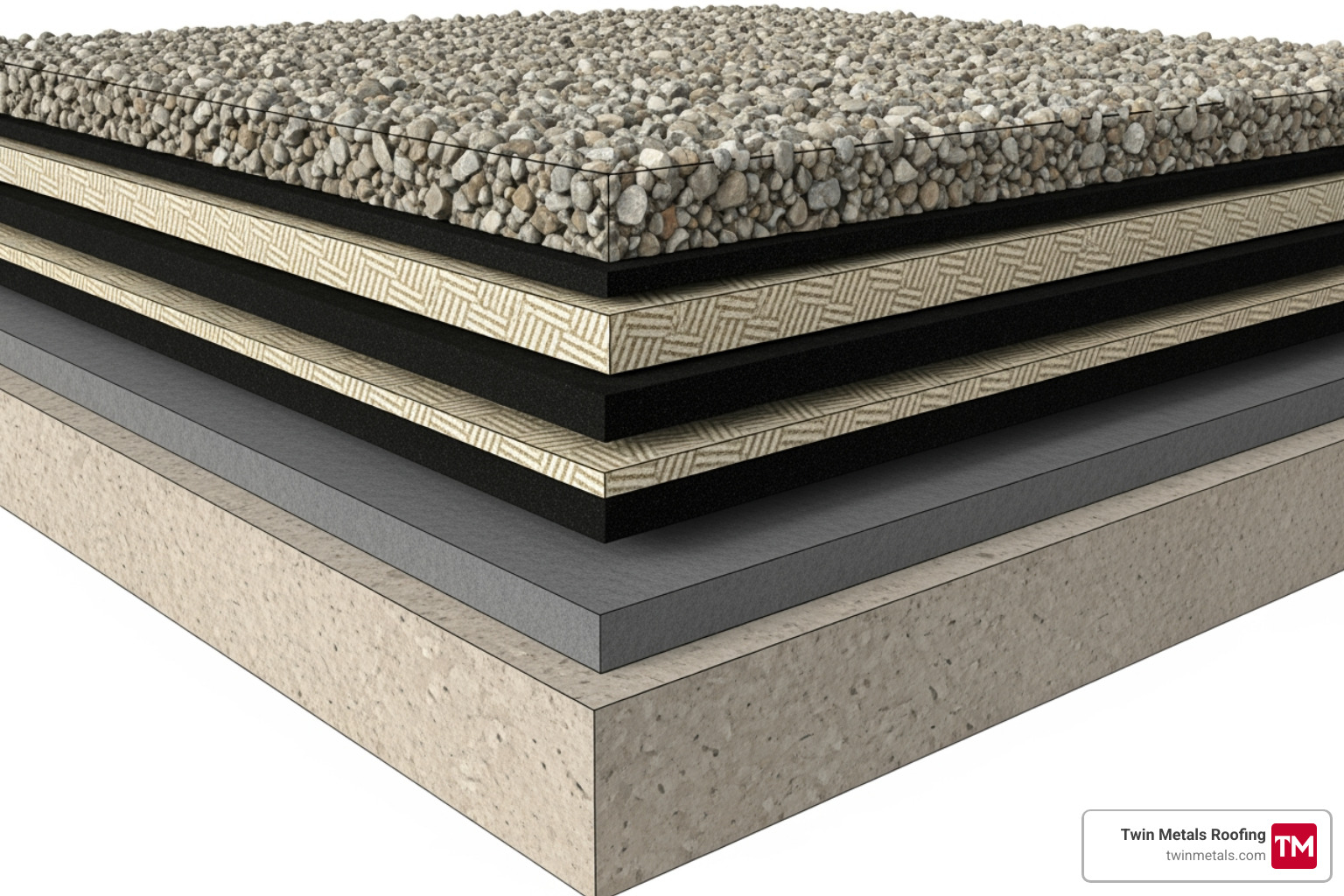
Here’s a breakdown of the typical components:
- Bitumen (Asphalt): This is the “hot tar,” typically asphalt (a petroleum by-product) heated to a liquid state. It acts as the adhesive and primary waterproofing agent.
- Reinforcing Felts: These are layers of asphalt-saturated felt (often fiberglass) that provide structural strength. A “ply” is one layer of felt and asphalt; systems typically have 3-4 plies.
- Flood Coat: This is the final layer of hot asphalt applied over the reinforcing felts.
- Surfacing Layer (Gravel or Mineral Cap Sheet): Gravel is often embedded into the final flood coat to protect the asphalt from UV rays, add fire resistance, and provide a durable surface. A mineral cap sheet is sometimes used as an alternative.
These layers are “built up” one on top of the other, creating a robust, protective structure. As This Old House explains, this layering is what creates the protective membrane of a flat commercial roof. The result is a dense, weather-resistant system designed to withstand the elements for decades.
The Application Process: From Kettle to Roof
Installing a hot tar roof is a precise, labor-intensive process requiring skilled professionals and specialized equipment.
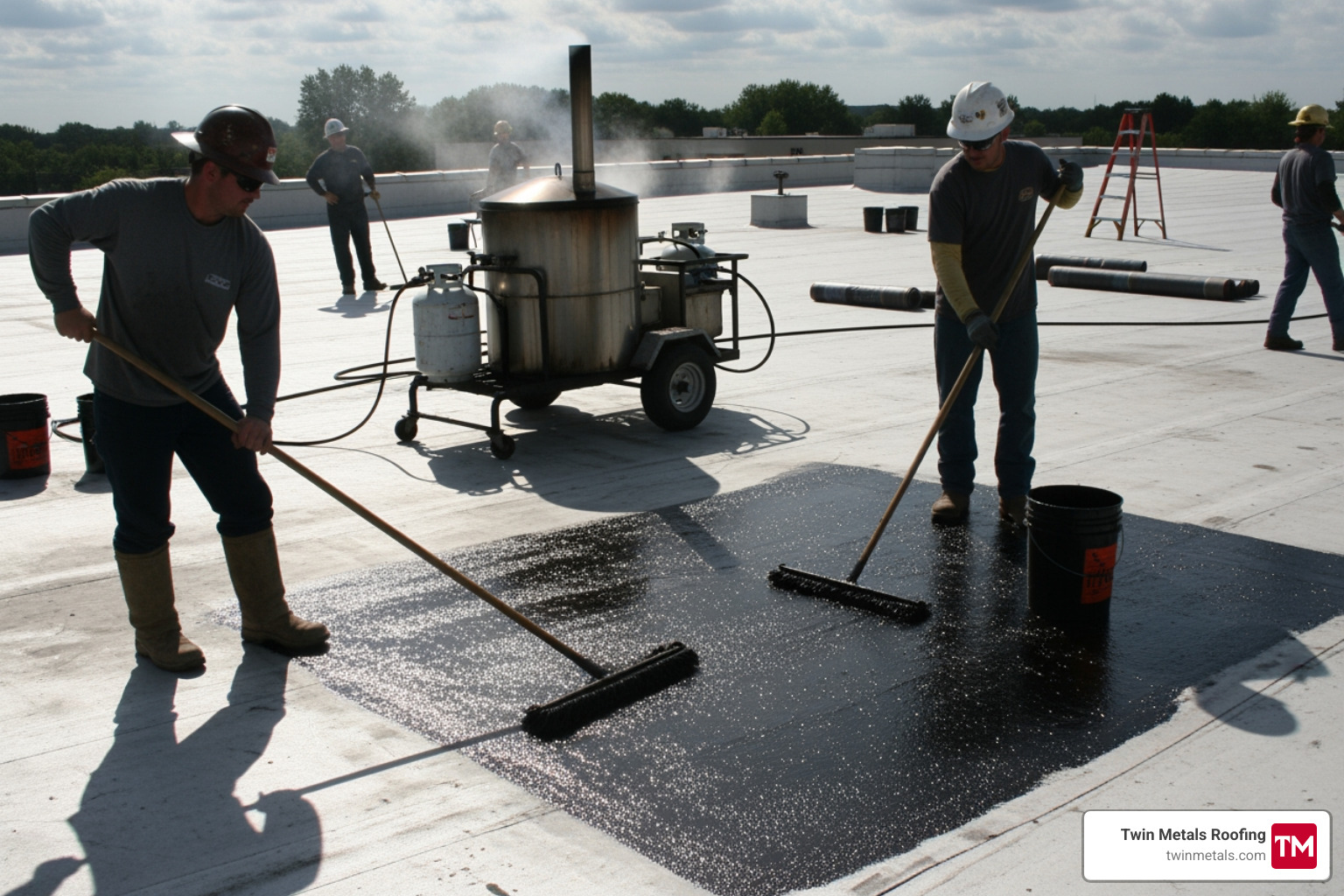
Here’s how our professionals typically approach it:
- Heating the Asphalt: Solid asphalt is heated in a specialized kettle to a precise liquid state, typically 190°-218°C (375°-425°F). Correct temperature is crucial; overheating degrades the material and creates hazards, while underheating makes it too thick to apply.
- Preparing the Base: Before any tar is applied, the roof deck is prepared. This might involve cleaning, repairing, and installing a base layer or vapor barrier, depending on the specific system and roof type.
- Hot Mopping Technique: Hot asphalt is transported to the roof via pump or in steel buckets. Roofers then use special mops to apply it evenly in a technique called “hot mopping.”
- Layering Plies: Immediately after a section of hot asphalt is mopped, a roll of reinforcing felt (a “ply”) is laid over it. This process is repeated, alternating layers of hot asphalt and felt, typically for three or four plies, to create a seamless, watertight membrane.
- Applying the Flood Coat: Once the desired number of felt and asphalt layers are in place, a final, thicker layer of hot asphalt, known as the “flood coat,” is applied.
- Embedding Gravel (or other surfacing): While the flood coat is still hot, a layer of gravel is spread over the entire surface. This gravel adheres to the hot asphalt, providing crucial UV protection, enhancing fire resistance, and protecting the membrane from physical damage.
As eHow’s guide on applying hot tar roofing emphasizes, this entire process demands careful attention to detail and strict adherence to safety protocols. It’s a job best left to the seasoned professionals who understand the nuances of working with such materials. For comprehensive commercial roofing solutions in places like Commercial Roofing Woburn MA or Commercial Roofing Methuen MA, trust our team at Twin Metals Roofing to handle the complexities.
The Pros and Cons of Hot Tar Roofing
When choosing a commercial roofing system in Massachusetts or New Hampshire, it’s important to weigh the pros and cons of traditional options like hot tar roofing.
Key Advantages of a Hot Tar Roof
Despite the emergence of newer roofing technologies, hot tar roofs continue to be a popular choice for several compelling reasons:
- Seamless Membrane: A key advantage is the creation of a monolithic, seamless membrane. The hot-applied, built-up layers eliminate seams, which are common failure points in other systems, creating a superior waterproofing barrier.
- Exceptional Durability: BUR systems are renowned for their toughness. The multiple layers of felt and asphalt create a thick, resilient membrane that can withstand physical impact, punctures, and harsh weather conditions.
- Impressive Lifespan: A properly installed and maintained hot tar roof has an impressive lifespan, averaging 20 years, with some lasting 30 years or more.
- Excellent Weather Resistance: The robust, multi-layered design provides excellent resistance to wind uplift, hail, and heavy rain. The gravel surfacing adds an extra layer of protection against UV degradation and physical wear.
- Cost-Effectiveness: Hot tar roofing is often the most affordable flat roofing option, offering excellent long-term value for budget-conscious property owners, as noted by This Old House.
- Insulating Properties: The thermal mass of a hot tar roof can provide insulating benefits, potentially reducing annual heating bills by helping to regulate indoor temperatures.
Significant Disadvantages to Consider
While the benefits are clear, it’s crucial to acknowledge the drawbacks, particularly concerning installation and environmental impact:
- Installation Hazards: The most significant drawback is the installation hazard. Applying molten asphalt at temperatures up to 550°F (288°C) poses severe burn risks, as highlighted by the CDC. The process requires extensive safety training and specialized equipment.
- Hazardous Fumes and Odor: Heating asphalt releases hazardous fumes and a strong odor, which can irritate workers and be a nuisance to building occupants. The University of Minnesota’s Department of Environmental Health and Safety discusses the impact of these odors on air quality. Proper ventilation is essential.
- Heavy Roof Weight: A multi-ply BUR system with a gravel surfacing layer is considerably heavier than most modern single-ply membranes. This added weight requires the building structure to be able to support it, which might necessitate structural evaluations, especially for older buildings in areas like Commercial Roofing Concord MA or Commercial Roofing Bedford MA.
- Not a ‘Cool Roof’ & Heat Island Effect: Traditional black hot tar roofs absorb a significant amount of solar radiation, contributing to the “urban heat island effect.” They are not considered “cool roof” assemblies, which can lead to higher cooling costs.
- Requires Specialized, Experienced Labor: Due to the complexity and safety risks, installing a hot tar roof requires highly skilled, certified, and insured roofing professionals who are thoroughly trained in BUR application techniques and safety procedures.
Understanding these pros and cons is essential for any property owner considering hot tar roofing. It’s a robust system, but its installation demands respect for the material and the process.
Critical Safety and Application Standards for Hot Tar Roofing
With hot tar roofing, safety is the golden rule. Working with molten asphalt requires strict adherence to industry standards and safety protocols to protect our team and your property.
Managing Temperature for Optimal Performance
Asphalt temperature is the most critical factor for a successful application. It must be hot enough to adhere properly but not so hot that it degrades or becomes a fire hazard.
- Equiviscous Temperature (EVT): This is the sweet spot. The EVT is the ideal temperature at which asphalt achieves the perfect viscosity for application. Manufacturers provide the specific EVT for their products, and our professionals carefully monitor this. For hand mopping, an ideal viscosity of 125 cP is required, while mechanical mopping needs a lower viscosity of 25 cP.
- Dangers of Overheating: Overheating asphalt degrades the material, causing brittleness and cracking (“alligatoring”). More critically, it increases fire risk if the asphalt reaches its flash point. Per ASTM D312 guidelines, kettle temperatures must stay below 288°C (550°F), and the working temperature of 190°-218°C (375°-425°F) must remain well below the flash point.
- Accurate Measurement: Our teams use hand-held thermometers to constantly monitor the asphalt temperature in the kettle and at the point of application, ensuring it stays within the optimal range. This meticulous approach ensures quality and safety. The Asphalt Roofing Manufacturers Association (ARMA) provides comprehensive recommendations on managing built-up roofing asphalt.
The Impact of Weather on Installation
Weather conditions, especially cold temperatures, can significantly complicate hot tar roofing applications.
- Cold Weather Challenges: Cold weather is a major challenge, as asphalt loses heat rapidly. If applied too cold, it becomes too viscous, leading to poor adhesion and compromising the waterproof membrane. As noted by the NRCA’s research on the EVT concept, experienced crews may need to adjust application temperatures in the field.
- Ideal Application Conditions: Dry, moderate temperatures are generally preferred for optimal application. Our experienced teams are trained to adapt to various conditions, employing strategies like using insulated equipment and minimizing the distance the hot asphalt travels.
- Wind Speed Considerations: Wind can accelerate the cooling of hot asphalt and also cause issues with fume dispersion. Our crews carefully consider wind conditions and take measures to mitigate these effects.
Essential Safety Protocols
Safety is non-negotiable when dealing with hot tar roofing. Our commitment to safety protects our crew and your property. Here’s a glimpse into the essential protocols we follow:
- Personal Protective Equipment (PPE): This is the first line of defense. Our roofers are equipped with:
- Eye protection and face shields to guard against splashes.
- Heat-resistant gloves to protect hands and arms.
- Long-sleeved shirts and pants (often cotton) to cover exposed skin.
- Non-skid footwear for stability on the roof.
- Respiratory protection, available upon request, to minimize fume inhalation.
- Site Safety: The entire work area is carefully managed.
- Fire Extinguishers: At least one fully-charged 4A40BC-rated fire extinguisher is kept within 20 feet of workers.
- Kettle Placement: Roofing kettles are placed on firm, level ground, away from flammable materials and at least 3 m (10 ft) away from propane cylinders. Kettle wheels are blocked to prevent movement.
- Ventilation: Adequate ventilation is ensured around heating equipment to disperse fumes. We also coordinate with building owners regarding HVAC systems to prevent fumes from entering the building.
- Emergency Preparedness: An emergency plan is always in place, including clear escape routes and a first aid attendant with a heat/burn treatment kit.
- Certified and Insured Contractors: Hiring a certified and insured roofing contractor is critical. Certification ensures proper training in application and safety, while insurance protects you from liability. We are licensed and insured, providing peace of mind for property owners in places like Commercial Roofing Needham MA and Commercial Roofing Lexington MA.
By adhering to these stringent standards, we ensure that every hot tar roofing project is completed not just effectively, but also safely.
Considering Hot Tar Roofing vs. Other Roofing Options
While hot tar roofing has a long history, the roofing landscape has evolved. Today, property owners in Massachusetts and Southern New Hampshire have a wider array of flat roofing options, each with its own characteristics.
Many property owners are now choosing newer systems that offer different advantages in terms of installation, energy efficiency, and environmental impact. Understanding these alternatives is key to making an informed decision for your commercial property. For expert advice custom to your specific needs, we encourage you to explore our comprehensive Commercial Roofing services.
Comparing Hot Tar (BUR) with Other Common Flat Roofing Approaches
Here’s a simplified comparison of hot tar roofing (BUR) with some other popular flat roofing options. Please note that the “Installation Cost” figures are average estimates based on publicly available internet data and are not representative of Twin Metals Roofing’s actual pricing. Actual costs can vary widely based on project complexity, materials, and specific site conditions.
| Criteria | Hot Tar (BUR) | Modified Bitumen (Mod-Bit) | EPDM (Rubber Roofing) | TPO (Thermoplastic Polyolefin) |
|---|---|---|---|---|
| Lifespan | 20-30 years | 15-25 years | 20-30 years | 15-25 years |
| Installation Cost | $4 – $12 per sq. ft. (average) | $5 – $15 per sq. ft. (average) | $4 – $12 per sq. ft. (average) | $5 – $15 per sq. ft. (average) |
| Durability | Excellent (multi-ply, impact resistant) | Very Good (reinforced, flexible) | Good (puncture resistance varies by thickness) | Good (puncture resistance varies by thickness) |
| Installation Safety | High risk (hot asphalt, fumes, burns) | Moderate (torch-applied has fire risk; cold-applied safer) | Low (cold-applied adhesives or mechanical fasteners) | Low (hot-air welded seams, no open flame) |
| Energy Efficiency | Low (dark surface absorbs heat, not a ‘cool roof’) | Moderate (can be reflective if surfaced) | Moderate (dark surface absorbs heat, white versions exist) | High (typically white, highly reflective ‘cool roof’) |
| Maintenance | Moderate (gravel displacement, crack checks) | Moderate (seam checks, granule loss) | Low (seam checks, UV degradation) | Low (seam checks, surface cleaning) |
Note: Twin Metals Roofing specializes in asphalt shingle and metal roofing systems for both residential and commercial properties in MA and NH. While we understand the nuances of various flat roofing options, we focus on providing high-performance solutions with modern materials.
When considering flat roofing for your property in Commercial Roofing Waltham MA or Commercial Roofing Burlington MA, it’s clear that while hot tar roofing offers proven durability, newer systems often present advantages in installation safety and energy efficiency. We work with you to determine the best fit for your building’s specific needs and budget.
Frequently Asked Questions about Hot Tar Roofing
We understand that property owners have plenty of questions about hot tar roofing. It’s a complex system with a long history, so let’s unpack some of the most common queries.
How long does a hot tar roof last?
A key feature of a hot tar roof (BUR system) is its lifespan. A well-installed and maintained roof averages twenty years, but some can last thirty years or more.
Several factors influence this longevity:
- Installation Quality: A professional, meticulous installation is paramount. Any shortcuts can drastically reduce the roof’s life.
- Climate: Harsh weather, extreme temperature fluctuations, and prolonged UV exposure can affect the roof’s aging process.
- Maintenance: Regular maintenance is key to maximizing lifespan. Neglecting minor issues can lead to bigger problems.
What kind of maintenance does a hot tar roof require?
To reach its full lifespan, a hot tar roof requires regular maintenance; it is not a “set it and forget it” system.
Here’s what typical maintenance involves:
- Regular Inspections: We recommend at least annual inspections, ideally in the spring and fall, and after any severe weather events. Look for signs of wear, such as cracks, blisters (bubbles in the membrane), or areas where the gravel surfacing might be thin or displaced.
- Checking for Ponding Water: Flat roofs are designed for drainage, but sometimes water can collect in low spots. Prolonged ponding water can accelerate membrane degradation.
- Keeping Drains and Scuppers Clear: Ensure all roof drains, scuppers, and gutters are free of debris to allow for proper water flow. Clogged drains are a leading cause of roof issues.
- Repairing Displaced Gravel: The gravel layer is vital for UV protection. If it’s displaced, it exposes the asphalt to direct sunlight, which can lead to premature aging. Our teams can redistribute or add new gravel as needed.
- Addressing Cracks and Blisters: Small cracks or blisters should be repaired promptly by a professional to prevent water infiltration.
Proactive maintenance by experienced professionals in locations like Commercial Roofing Stoneham MA or Commercial Roofing Wilmington MA can significantly extend the life of your hot tar roof.
Is hot tar roofing environmentally friendly?
The environmental friendliness of hot tar roofing is complex. While durable, it has several environmental drawbacks:
- Fume Emissions (VOCs): During installation, heating asphalt releases volatile organic compounds (VOCs) and other fumes into the atmosphere, contributing to air pollution.
- Contribution to Urban Heat Island Effect: Traditional dark-colored hot tar roofs absorb sunlight, contributing to the urban heat island effect, which raises city temperatures and increases energy use for cooling.
- Disposal Challenges: At the end of its life, hot tar roofing material can be challenging to recycle and often ends up in landfills.
- Resource Intensive: The production of asphalt, a petroleum by-product, is energy-intensive.
Compared to newer, highly reflective “cool roof” materials or fully recyclable single-ply membranes, traditional hot tar roofing generally has a larger environmental footprint. However, its long lifespan can somewhat offset these concerns by reducing the frequency of roof replacements.
Conclusion: Is a Hot Tar Roof the Right Choice?
So, after all this talk about kettles, plies, and the occasional aromatic waft of hot asphalt, is hot tar roofing the right choice for your commercial property in Massachusetts or Southern New Hampshire?
In summary, hot tar roofing is a time-tested system that offers exceptional durability and superior waterproofing through its multi-layered, seamless membrane. It boasts a long lifespan and can be a cost-effective solution over many years. However, its installation comes with significant safety risks due to high temperatures and hazardous fumes, and it’s not the most environmentally friendly option, contributing to the urban heat island effect. It’s a classic, but like a classic car, it requires specific expertise and care.
While hot tar roofing certainly has its place, many property owners in MA and NH are now opting for modern alternatives that offer safer installation processes, better energy efficiency, and often a lighter environmental footprint. These newer systems might include various forms of single-ply membranes or advanced modified bitumen applications.
At Twin Metals Roofing, we specialize in high-performance asphalt shingle and metal roofing solutions for both residential and commercial properties. We’re dedicated to providing you with roofing systems that not only meet your durability and performance expectations but also align with modern safety and efficiency standards. We believe in superior performance, quality materials, and exceptional customer service, ensuring you get a roof that truly fits your needs.
For expert advice on the best roofing system for your property, explore our Commercial Roofing services. We’re here to guide you through the options, whether you’re in Commercial Roofing Natick MA, Commercial Roofing Peabody MA, or anywhere across Berkshire County in Eastern Massachusetts and Southern New Hampshire.
Follow us on Facebook — https://www.facebook.com/twinmetalsroofing
Follow us on Instagram – https://www.instagram.com/twinmetals/